


.svg)


Common context has two components:
- Publishers—The field which dictates the values populated in the Subscribers. When a value is entered or published into a publishing field, it populates all the subscribing fields configured in the same scope.
- Subscribers—The field or application link which is populated by the publishing field value.
Example
Common context is often used to filter for records with related information amongst multiple applications or interactive reports. For example, on a dashboard page you could configure common context so that when a customer name is entered in an application field, other applications or reports populate the customer's transaction and contact information in their respective cards.
Similarly, in a composite application, you could configure common context so that when a customer name is entered in the first application step of the composite, the selected customer's information would be visible in subsequent application steps.
The diagram below shows a dashboard page with common context configured in three applications used as dashboard cards:
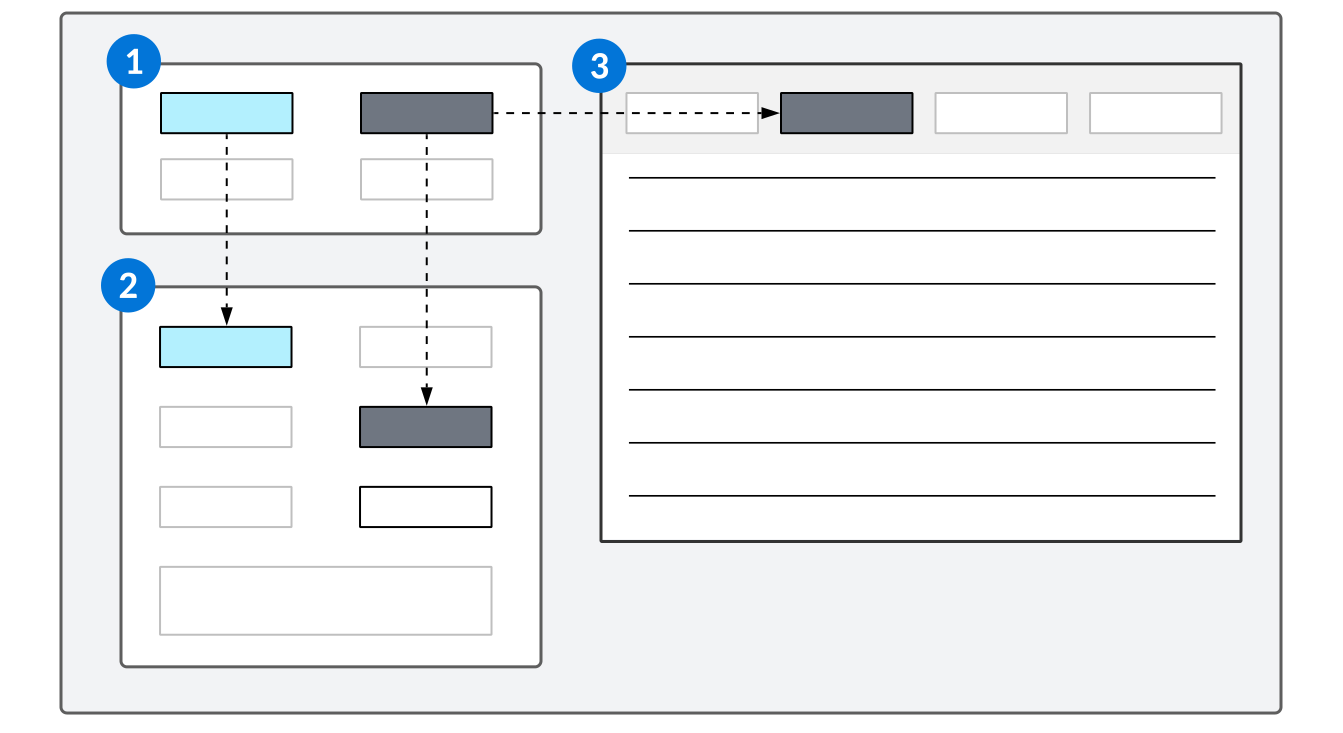
 | The application is configured with two Publisher fields. |
|---|---|
 | The application is configured with two Subscriber fields. The values in each Publisher field populate the Subscriber fields within the same scope. |
 | The application is configured with one Subscriber field. The value in the Publisher field populates the Subscriber field within the same scope. |
View an example of a dashboard using common context in Example: common context on a dashboard.
Scope
Common context is configured within a scope. The scope defines in what context a Subscriber listens to a Publisher. This is necessary because Publishers and Subscribers can have one-to-many, many-to-one, and many-to-many relationships. The scope is defined using the data mapper tool when configuring the Publisher or Subscriber. You can also create a boundary for the common context scope in both a dashboard page, or a composite application configuration. This enables you to use the same application in multiple places without it being impacted by the common context tied to it elsewhere.
Learn more in Common Context configuration.
Common context can be used in place of, as well as in addition to, logic blocks and application settings to control field values.